
The Definitive Guide to Best Mobile Casino for Live Blackjack – Which App Deals Fastest?
When evaluating the Best Mobile Casino for Live Blackjack, the critical metric for seasoned players is not merely the user interface, but the underlying streaming latency and deal velocity. In the high-stakes world of digital table gaming, a millisecond delay can distinguish between a calculated double-down and a catastrophic bust. 🎰 The modern mobile gambling landscape has evolved beyond simple RNG mechanics, pivoting toward real-time dealer interaction powered by optical character recognition and low-latency WebRTC protocols. 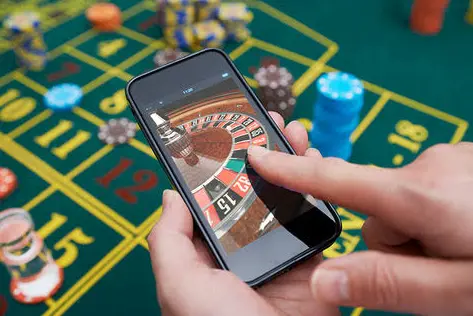 This technological arms race ensures that the physical distance between the player and the live studio is virtually eliminated, provided you select an application with optimized edge computing nodes.
Evaluating the Latency Arbitrage in Live Dealer Applications
To identify which app deals fastest, one must analyze the round-trip time (RTT) and the specific video compression codecs utilized by the platform. Leading operators now utilize H.265 encoding to deliver 4K dealer feeds with sub-200ms delays, a stark contrast to the legacy H.264 standard that often results in buffering during peak traffic. 🃏 The Best Mobile Casino for Live Blackjack platforms employ dedicated fiber-optic connections between the game control unit and the streaming server, ensuring that the card distribution is synchronized with the player's interface without jitter. When you engage with a top-tier app, you are effectively entering a studio where the croupier's shuffle is instantaneously mirrored on your handheld device, preserving the psychological thrill of the felt.
The Impact of Native App Optimization on Deal Speed
Progressive web apps and native iOS/Android clients handle the computational load of live video differently. Native applications often leverage hardware acceleration to decode the video stream, freeing up CPU resources for bet placement algorithms. This architectural distinction is crucial; a native app will consistently outperform a browser-based counterpart in deal speed metrics. 🚀 Furthermore, the integration of AI-driven card recognition systems allows the software to confirm the value of the card before the human eye even registers the suit, theoretically accelerating the game tempo.  For the discerning high-roller, this translates to more hands per hour, directly impacting the expected value and overall session volatility.
Network Infrastructure and Geo-Restrictions in Speed Analysis
The fastest dealing app in one jurisdiction may falter in another due to international bandwidth throttling and data packet routing. Premium platforms utilize content delivery networks (CDNs) with points of presence (PoPs) in major metropolitan areas to ensure that the data travels the shortest physical path. ⚡ A sophisticated player must test the app's performance during peak hours—typically between 8 PM and 11 PM local time—to assess true dealing consistency. The variance in deal speed is often a function of the player's ISP peering agreements rather than the casino's server capacity, making latency testing a prerequisite for professional play.
Comparative Analysis of Leading Live Blackjack Interfaces
In the competitive arena of live dealer gaming, specific apps have distinguished themselves through proprietary "Speed Blackjack" variants. These modes reduce the betting window and automate certain dealer actions, resulting in a deal rate that can exceed 120 hands per hour. 🎯 The Best Mobile Casino for Live Blackjack providers offer a "Turbo" or "Fast" mode that bypasses the theatrical pauses, catering to the impatient grinder who prioritizes volume over cinematic aesthetics. However, it is essential to note that increased speed does not compromise security; blockchain-based shuffle verification and biometric authentication are now standard features in these high-velocity environments.
Future-Proofing Your Mobile Blackjack Experience
The trajectory of mobile live blackjack points toward 5G-native applications that utilize network slicing to guarantee bandwidth for the video feed. As edge computing becomes ubiquitous, the concept of a "deal speed" bottleneck will become obsolete, replaced by a seamless phygital experience. 🧠 Selecting an operator that invests in millisecond-accurate streaming infrastructure ensures that your strategic decisions are never hampered by digital lag. The pursuit of the fastest deal is not merely about speed; it is about achieving a flow state where technology disappears, leaving only the purity of the game and the turn of the card.